

The ancient Maya community was highly advanced in terms of architectural and engineering capabilities that were way beyond its era. Their skill to incorporate high knowledge of mathematics, astronomy and engineering in grand structures has left a permanent mark in some of the most impressive and long lasting structures in Mesoamerica. The achievements of the Maya are not confined to the construction of temples and cities, they created spaces that embodied their cosmology, social stratification and technological advancement.
Mathematical Precision and Astronomical Alignment
Maya architects and engineers applied advanced mathematical ideas such as geometric proportions to create their buildings with amazing precision. The celestial events like solstices and equinoxes were well measured in many Maya buildings, particularly temples and pyramids. This was not just a symbolic alignment but it showed that the Maya were highly knowledgeable on astronomy and could apply astronomy in real life architecture. As an example, the well-known Pyramid of Kukulkan at Chichen Itza is oriented to the sun on equinoxes producing serpent-like shadows, which represent religious concepts. Their architectural designs were highly linked with astronomical databanks that controlled the order of construction and the ritual applications of the buildings.
Innovative Engineering Techniques
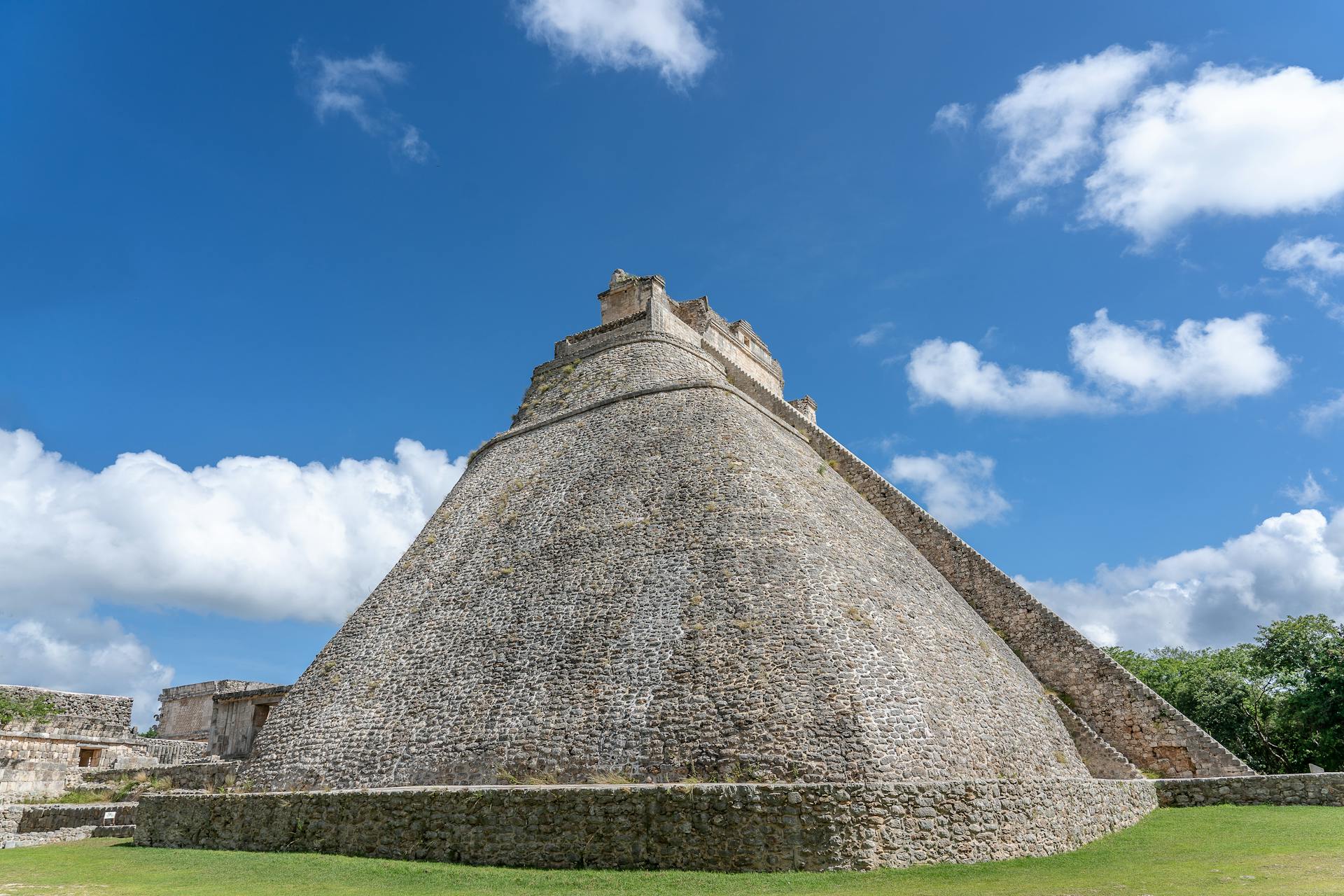 The Maya also used specific and new engineering techniques that were appropriate to their surroundings and materials they had. Their chief material was limestone, that was easily quarried in the vicinity, and by cutting the stones and fitting them up, they managed to do it without mortar. The corbel vaulting style is also a characteristic of Maya construction, with stones being laid in successively smaller layers until the roof takes the form of an arch without an arch. This enabled them to construct great interior rooms and roofs even without the use of arch technology. Also, the Maya constructed highways called sacbeob which were elaborate and were tens of miles in length and were constructed several feet above the ground and this showed expertise in civil engineering. The enhanced water management systems like underground aqueducts in Palenque demonstrated their capacity to control topography and water movement to plan urban areas and agriculture.
Urban Planning and Structural Hierarchy
Maya cities were not just a haphazard group of structures but were carefully laid-out urban centers that demonstrated social and religious stratifications. Massive plazas were created at the center of which were monumental temples, palaces and ball courts, which were commonly situated on multi-level platforms. These monuments were used in religious, housing and administrative purposes that were intertwined with Maya faiths. The spatial grid observed had set axes which were usually in line with the cardinal directions. This organization brought order in the urban environment balancing the practicality with spiritual and political symbolism. The impressiveness of the Maya urban design in terms of scale and connectivity was enhanced by the use of roads, causeways, and plazas to aid movement and social interaction.
Materials and Decorative Mastery
The building material used was mostly limestone which was plentiful and easy to handle by the Maya. They carved these stones using primitive tools and they painted buildings using stucco that gave them surfaces on which they could decorate in detail, with very bright colors. Maya craftsmen decorated buildings with detailed carvings, glyphs and painted murals of mythological and kingly themes and cosmic ideas. These decorative sculptures were not just decorative but they conveyed religious and historical stories that were at the core of Maya identity. Their structures rose above the level of functional architecture to the grand and symbolic expressions of power and faith due to the harmony of engineering prowess and fine artistry combined.
Legacy of Maya Architectural Engineering
The architectural work of the Maya, which includes the Preclassic and the Late Classic periods, can be characterized by constant improvements in terms of engineering and design. Their ingenuity is demonstrated by their capacity to build large, durable and astronomically important buildings using only metal-free tools and no draft animals. The Maya cities and temples are some of the monuments of a civilization that incorporated science, art, and religion into their created environment on a seamless level. The Maya engineering innovations of managing water and transport, and structural stability in an urban setting continue to be impressive and underscore the Maya as the pioneers of ancient Mesoamerican engineering.
To sum up, the architectural brilliance of the Maya is in their high level of mathematics, astronomy, engineering inventions, city design, and decorative art. Their power to construct such massive and practical cities and temples before their time is the main reason why scholars and visitors are still fascinated by their civilization, which was incredibly advanced in merging technology with culture.